
Pet Portrait Tattoos in Edmonton: From Favourite Photo to Realistic Tattoo

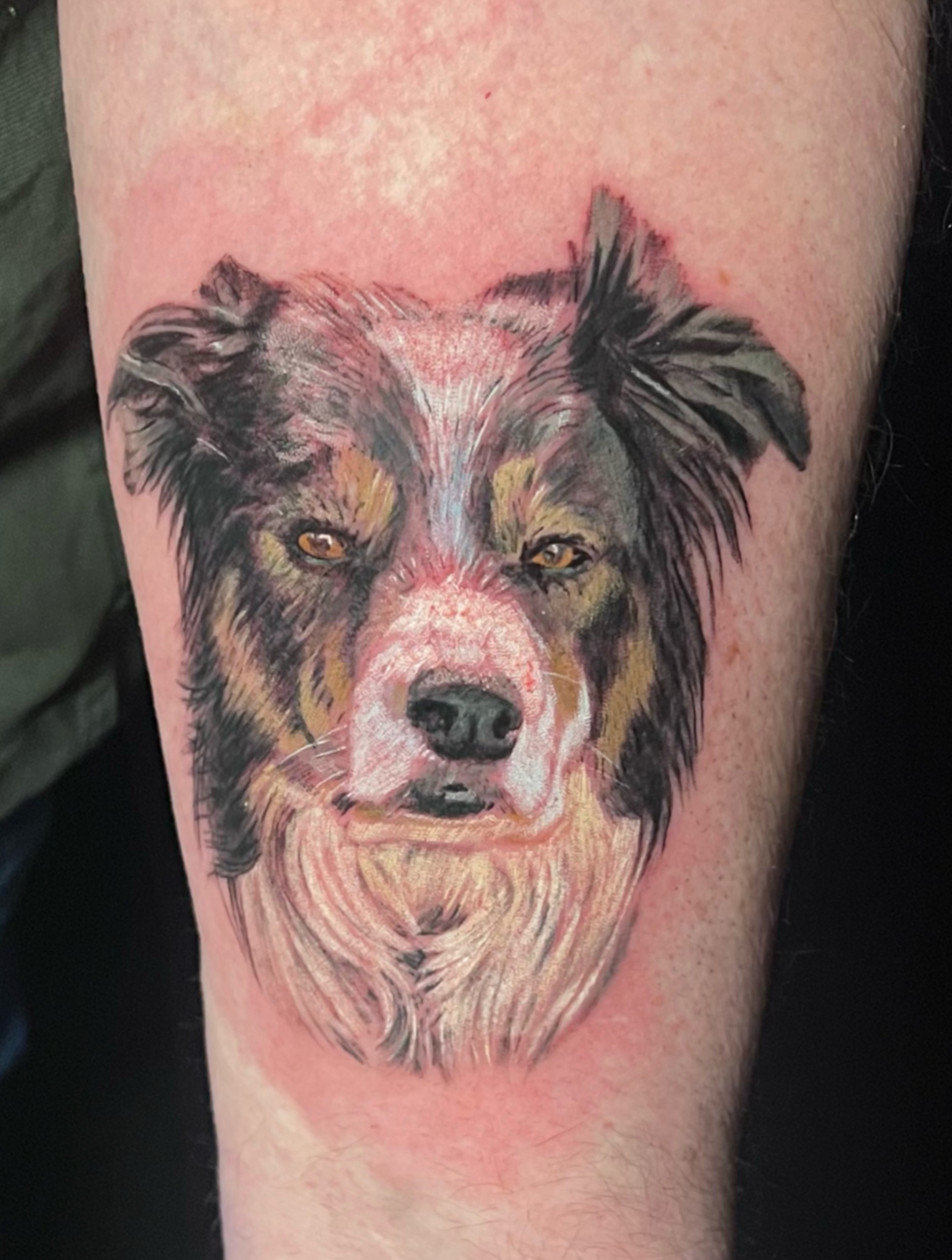 | 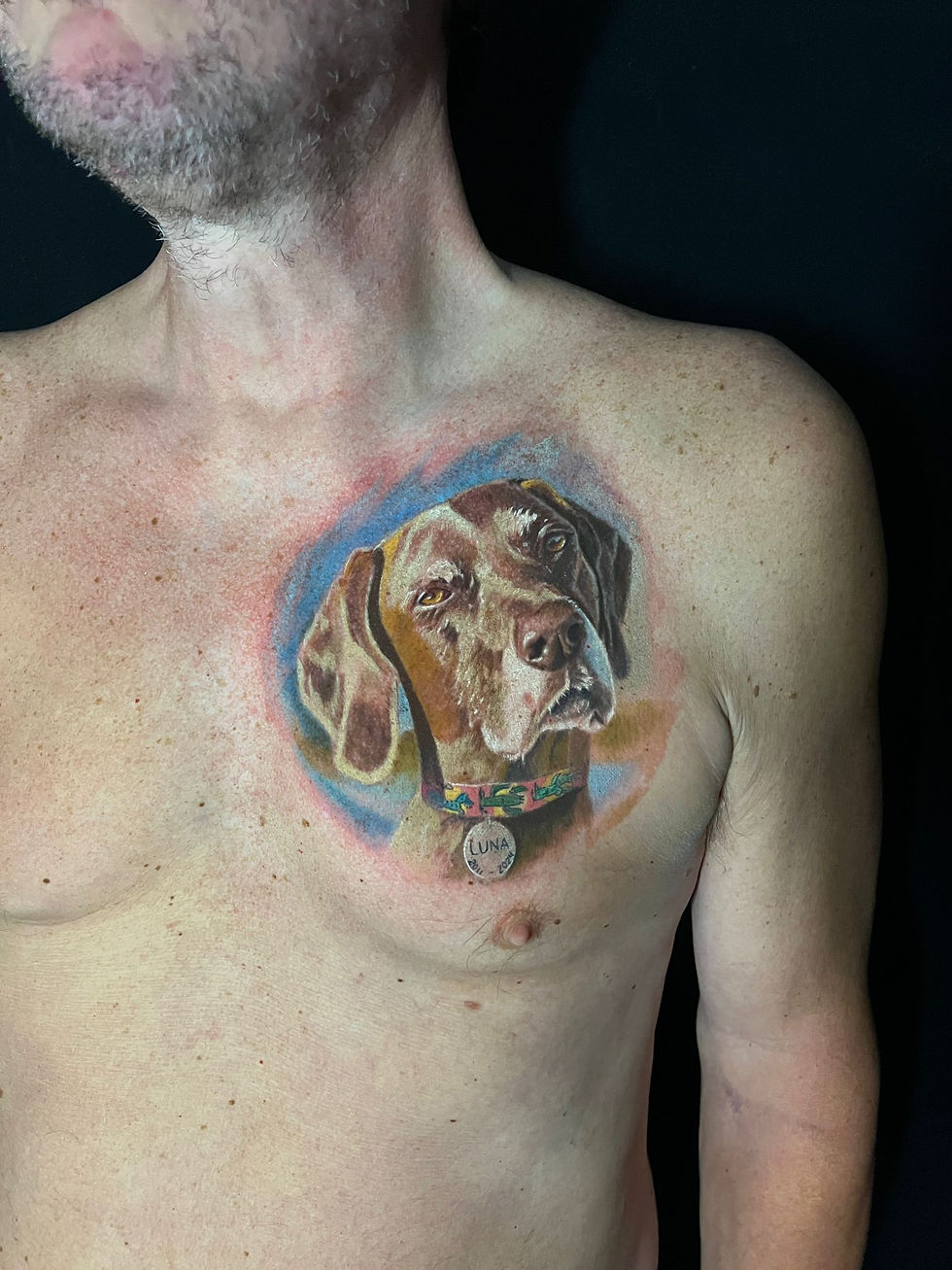 |  |
There are hundreds of photographs of your pet on your phone. Probably thousands.
But there's usually one that stands out.
Maybe it's the ridiculous expression they always made. The way they tilted their head when they heard your voice. Or simply a photograph that looks so much like them that you can almost feel their presence.
That's often where the idea for a pet portrait tattoo begins.
A realistic black-and-grey tattoo can turn that photograph into something permanent. But creating a good portrait involves more than reproducing an image. It's about choosing the right reference, understanding how the tattoo will sit on the body, and capturing the details that make your pet recognizable.
Here's what to consider before booking.
Why Choose Black and Grey for a Pet Portrait?
Black-and-grey realism uses variations of black ink, soft shading and skin tone to create depth, texture and contrast.
For animal portraits, this approach can be especially effective.
The subtle transitions help describe the softness of fur, the shape of a muzzle, and the expression around the eyes. Without colour competing for attention, the focus stays on the animal's features and personality.
Black-and-grey tattoos can work beautifully for dogs, cats, horses and other animals.
And you don't need a dramatic or perfectly posed photograph. Sometimes the most ordinary expression is the one that feels most familiar.
Choosing the Right Photo for Your Tattoo
This is probably the most important part of planning a realistic pet portrait.
A beautiful photograph isn't necessarily the best tattoo reference.
Your artist needs enough visual information to understand the animal's features, particularly the eyes, nose, fur direction and overall head shape.
What makes a good reference?
Natural lighting. Photographs taken near a window or outdoors often show more useful detail than images taken with a harsh flash.
Clear eyes. The eyes are often central to the expression. Ideally, they should be visible and in focus.
Good resolution. A clear original photograph gives your artist more information to work with than a compressed screenshot.
An authentic expression. Don't feel obligated to choose the most professional-looking photograph. Choose one that actually reminds you of your pet.
A useful angle. A three-quarter view can create beautiful depth, while a front-facing portrait can emphasize expression and symmetry.
If you're unsure which photograph to use, bring several options to your consultation.
Your artist can help identify the strongest reference—or suggest combining useful details from multiple photographs when appropriate.
Can You Get a Pet Portrait Tattoo From an Old or Blurry Photo?
Sometimes.
Many people commission pet portraits after losing an animal, and the photographs they have aren't always ideal.
An experienced realism artist may be able to work with an imperfect reference, especially if additional photographs are available.
However, there's a difference between improving the clarity of a reference and inventing details that aren't visible.
For a recognizable portrait, accuracy matters.
If your only photograph is small, dark or blurry, discuss it with your artist before committing to the project. They can explain what's realistically possible.
Where Should You Place a Pet Portrait Tattoo?
Placement affects both the appearance and the longevity of a realistic tattoo.
Areas with sufficient space and a relatively even surface are often good candidates.
Forearm
A popular choice for pet portraits. The forearm provides visibility and can accommodate a vertical composition.
Upper arm
Offers room for larger portraits, additional elements and more complex shading.
Thigh
Provides generous space for detailed animal portraits, particularly when the design includes more than one pet.
Calf
Can work well for elongated compositions or portraits with surrounding details.
The ideal placement depends on the size of the portrait, your anatomy and whether you plan to add other tattoos later.
How Big Should a Realistic Pet Portrait Be?
One of the biggest misconceptions about realism tattoos is that any photograph can simply be reduced to a tiny size.
A realistic portrait contains a lot of information.
Eyes, whiskers, fur texture and subtle changes in tone all need enough space to remain distinguishable.
If the design is too small, some details may become difficult to read as the tattoo settles and ages.
That doesn't mean every pet portrait needs to be enormous.
It means the size should suit the amount of detail you're asking the artist to preserve.
Your tattoo artist can recommend a minimum practical size based on the reference and placement.
Will a Black and Grey Pet Portrait Tattoo Age Well?
A thoughtfully designed black-and-grey portrait can remain attractive for many years, but all tattoos change as skin ages.
Over time, fine details may soften and very subtle tonal differences can become less distinct.
Strong composition, appropriate size, clear contrast and good technique all contribute to how readable a tattoo remains.
Sun protection and proper aftercare also matter.
A portrait should be designed for skin—not treated as a photograph printed on paper.
That distinction is particularly important with highly detailed animal fur.
Should You Add Flowers, Names or Other Elements?
You can, but you don't have to.
Some of the most striking pet portraits are simple: the animal's face, beautifully rendered, without unnecessary decoration.
Other clients prefer incorporating flowers, a name, a date or a meaningful object.
If you're considering additional elements, think about whether they enhance the portrait or distract from it.
For larger pieces, the surrounding design can also help connect the portrait to existing tattoos.
A good composition gives the animal enough visual importance without making every inch of skin compete for attention.
How Much Does a Black and Grey Pet Portrait Tattoo Cost in Edmonton?
The price depends on several factors, including the size, level of detail, placement and time required.
A small portrait with a simple composition will generally require less time than a large, highly detailed piece with additional elements.
At Max Color Ink, pricing can be discussed during your consultation after the artist has reviewed your reference photographs and design ideas.
If you're planning a larger project, appointments can also be arranged over multiple sessions where appropriate.
The best starting point is to share your photographs and approximate size so the artist can provide a realistic estimate.
Black and Grey Pet Portrait Tattoos by Alex at Max Color Ink
Alex specializes in black-and-grey realism, working with shading, contrast and fine detail to create lifelike images.
For a pet portrait, the goal isn't simply to reproduce every visible hair.
It's to preserve the expression and recognizable features that make the animal yours.
Whether you're celebrating a pet who is still enthusiastically taking over your sofa or remembering one who is no longer with you, a portrait can be a deeply personal piece of artwork.
[Insert Alex's strongest real animal portrait here, with a descriptive caption.]
Ready to Turn Your Favourite Photograph Into a Tattoo?
Start by choosing a few photographs you love.
You don't need to know the exact size, placement or final composition. Those details can be discussed during your consultation.
At Max Color Ink in St. Albert, serving Edmonton and surrounding communities, you can explore a custom black-and-grey pet portrait with Alex.
Start Your Tattoo — Request a Consultation With Alex
Share your reference photographs and tell us a little about the portrait you have in mind.


Comments